recipe
Zereshk Polo ba Morgh: saffron chicken with barberry rice
A complete Iranian saffron-chicken and barberry-rice meal using dried unsweetened zereshk, a separate tomato-sauce chicken braise, and short low-heat berry sauté.
Jump to ingredients and methodPrint using your browser’s Print command.
Ingredients and method
Ingredients
- 1 1/2 pounds skinless bone-in chicken thighs, fresh or safely thawed
- 2 US cups dry white basmati rice, rinsed and drained
- 4 US cups water for the no-soak absorption rice, measured separately from rinse water
- 2 tablespoons vegetable oil for the rice
- 1 medium yellow onion, thinly sliced
- 1 bell pepper, cut into large chunks
- 2 medium carrots, cut into small coins
- 3 tablespoons vegetable oil for chicken and vegetables, divided
- 3 tablespoons tomato paste
- 1 1/2 US cups water for the chicken sauce
- 1/2 teaspoon ground turmeric
- 1/2 teaspoon kosher salt for sauce plus more to taste
- 1/2 teaspoon ground black pepper
- 1/4 teaspoon finely ground saffron threads, bloomed in 2 tablespoons hot water, divided between chicken and rice
- 3 tablespoons dried unsweetened red zereshk barberries, picked over and rinsed, not sweetened cranberries
- 1 tablespoon vegetable oil for the barberries
- 1 tablespoon water for the barberries
- 1 tablespoon granulated sugar for the berries (reduce only after tasting your berry product)
- Additional salt to finish the rice, starting with 1/2 teaspoon
Method
- Pick over the dried barberries for stems or grit, rinse briefly and drain them well; keep cold until sauté time. Rinse basmati rice and drain. Slice onion and vegetables on a board separate from raw poultry.
- Bloom ground saffron by stirring it into the measured two tablespoons of hot water and set it aside. In a small saucepan heat one tablespoon of the three tablespoons chicken/vegetable oil with turmeric, tomato paste, sauce salt and pepper. Stir to deepen tomato color without burning, then add one-and-a-half cups water and simmer briefly until smooth; set aside.
- Heat the remaining two tablespoons chicken/vegetable oil in a wide skillet with a lid. Sear the skinless thighs on both sides, then lift them onto a dish reserved for the partly cooked chicken. Stir the onion, pepper and carrots in the pan for a few minutes. Return the chicken, pour in the tomato sauce and add half of the saffron liquid. Wash the partly cooked chicken dish before reusing it.
- Bring the skillet to a simmer, reduce heat, cover and cook until vegetables are tender and the thickest chicken piece measures 165°F (74°C) away from the bone. Begin checking after approximately 40 minutes, not as a guaranteed safety endpoint. Add a little water if the sauce becomes dry before chicken is fully cooked.
- While the chicken simmers, combine the drained, unsoaked rice, four US cups water and 1/2 teaspoon salt in a heavy pot. Bring to a boil and stir in the two tablespoons rice oil. Lower to a controlled simmer, uncovered, until standing water disappears and steam holes appear. Turn the heat low and cover with a close-fitting lid. Begin checking tenderness after 10–15 minutes, continuing gently as needed. Do not let a dry pot scorch or put a loose cloth near the burner.
- Shortly before serving, put the drained barberries, their measured tablespoon water, oil and sugar into a very small skillet. Warm on low heat, stirring briefly just until the berries plump and shine. Do not fry to dark or treat the berries as long-simmering stew ingredients; they scorch rapidly.
- Fluff the rice and lift a few spoonfuls into a small bowl. Stir the remaining saffron liquid gently into that rice for a golden accent. Plate the white rice, scatter golden grains and glossy barberries on top, and add chicken and some tomato sauce beside it. Refrigerate both rice and chicken leftovers promptly in separate shallow containers.
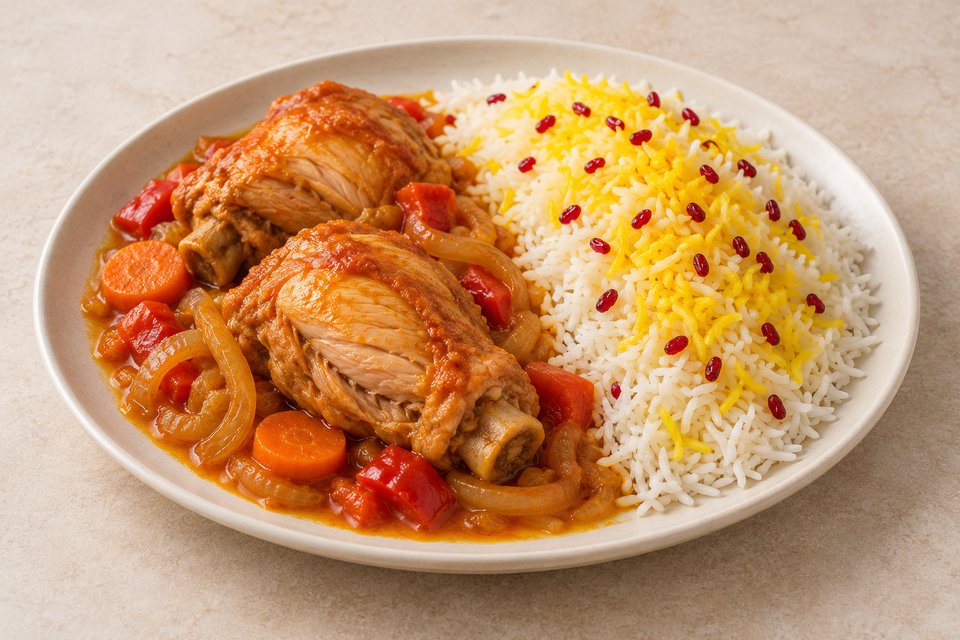
A separate chicken braise and rice pot
Zereshk polo ba morgh (زرشک پلو با مرغ) combines barberry rice with chicken. This version follows Shadi Hasanzadenemati's tomato sauce, carrot and bell-pepper approach, with a simpler oil-only finish and a separately cooked no-soak kateh rice base.
Homa's preparation simmers the chicken before adding its onion-tomato sauce and pairs it with drained-and-steamed rice. Those cooking sequences are different; this version does not promise tahdig.
Small tart berries need gentle heat
Use dried unsweetened zereshk, and remove stems or grit before rinsing. Heat the berries briefly on low; they should plump without becoming dark and scorched.
This version uses the smaller, lightly sweetened berry portion from Hasanzadenemati. Homa uses a larger portion with fried onions. Sweetened cranberries will give a different flavor and appearance.
Check chicken temperature and chill both components
Measure the thickest part of each thigh away from the bone; chicken must reach 165°F (74°C). Use clean serving utensils, separate from those used for raw or partly cooked poultry.
Rice and chicken both need prompt refrigeration. Divide leftovers into shallow containers within two hours, or one hour above 90°F, and keep at 40°F or below. Reheat leftovers to 165°F.
Research sources
- Shadi Hasanzadenemati — Zereshk Polo Morgh, Unicorns in the Kitchen (checked 2026-10-22)
- Homa — Zereshk Polo ba Morgh, Persian Mama (checked 2026-10-22)
- FoodSafety.gov — Cook to a Safe Minimum Internal Temperature (checked 2026-10-22)
- U.S. FDA — Safe Food Handling (checked 2026-10-22)
- Etrat Elahi — Kata, Encyclopaedia Iranica (checked 2026-10-22)