recipe
Noon Barbari: grooved Persian flatbread on a baking sheet
Persian barbari with weighed all-purpose flour, instant yeast and a cooked roomal glaze, baked directly on a lightly greased sheet at 425°F without parchment or a pizza stone.
Jump to ingredients and methodPrint using your browser’s Print command.
Ingredients and method
Ingredients
- 500 grams all-purpose flour (approximately 4 US cups spooned and leveled; weight is preferred)
- 7 grams instant dry yeast (about 2 1/4 teaspoons), not an unverified quantity of fresh yeast
- 7 grams salt (about 1 1/2 teaspoons fine salt; adjust to package grain size)
- 5 grams granulated sugar (about 1 teaspoon)
- 320 mL lukewarm water (about 1 1/3 US cups), not hot enough to scald or kill yeast
- 1 tablespoon olive or neutral vegetable oil for the dough, plus 1 teaspoon neutral oil to grease each of two baking sheets
- 1 tablespoon all-purpose flour for the cooked glaze (roomal), separate from dough flour
- 1/2 US cup water for the glaze, separate from dough water
- 1/2 teaspoon baking soda for the glaze only; not yeast replacement
- 2 teaspoons sesame seeds for sprinkling, optional
- A light dusting of extra flour for the work surface only if necessary
- Yogurt dip or breakfast cheese for serving, optional
Method
- Combine the dough flour, salt, sugar and instant yeast in a large bowl. Add the tablespoon oil and measured lukewarm water. Mix until no dry flour remains. Keep the separate flour, water and baking soda for the glaze out of the dough.
- Knead by hand for about 10 minutes until smooth, elastic and still soft, using only a light dusting of flour if needed. A stand mixer with a dough hook is another option; follow its manufacturer's kneading speed and duration limits. Cover and let rise in a warm place until noticeably puffy, checking after about 30 minutes.
- Divide into two equal pieces. Form gentle rounds, cover and let relax and puff again for about 30 minutes. If the room is cool, allow more time rather than forcing the dough to stretch.
- Whisk the glaze flour, 1/2 cup water and baking soda in a small saucepan. Bring to a gentle simmer while stirring and cook until slightly thickened, about 3–4 minutes. Remove from heat and cool until safe to touch.
- Lightly grease two sturdy metal baking sheets with one teaspoon oil each. Stretch one dough piece on each sheet into a long, even oval about 1/2 inch thick. Press parallel grooves lengthwise without cutting through. Brush lightly with the cooled glaze and sprinkle with optional sesame. Cover loosely and let puff for 20–30 minutes while the oven heats to 425°F (220°C).
- Remove the covers. With damp fingertips, deepen any grooves that have filled in. Bake one sheet at a time on the middle rack, starting to inspect around 20 minutes. Continue until the top and underside are golden and the center is set, allowing longer if needed. This version uses bare greased metal, without parchment or broiling.
- Use oven mitts to move the bread to a cooling rack. Let it rest at least 10 minutes before cutting. Serve plain or with optional cheese or yogurt dip.
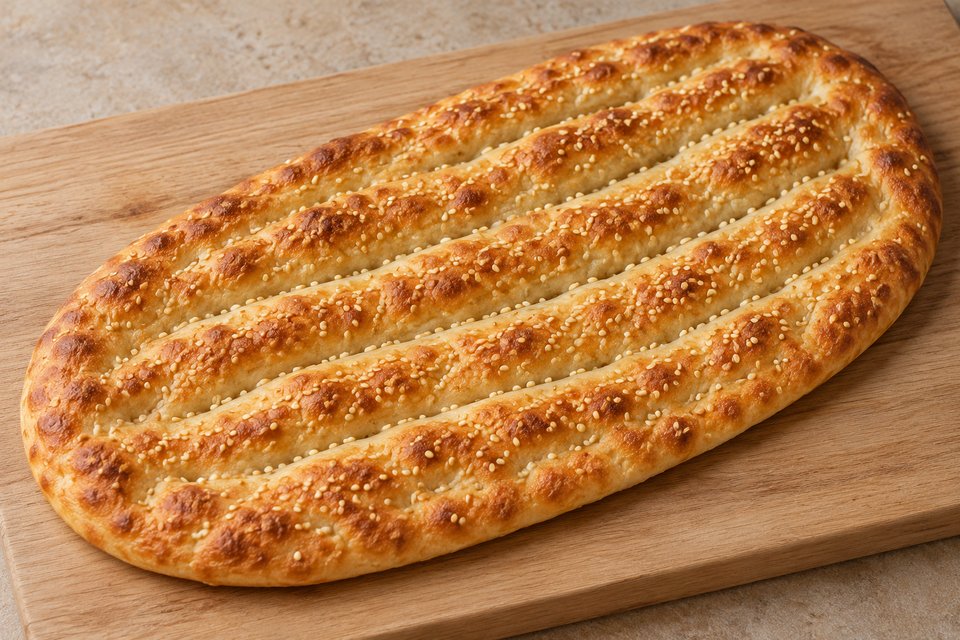
A baking-sheet version of barbari
Noon barbari (نون بربری, also nan-e barbari) is an oval Persian bread with long grooves and a cooked glaze called roomal. This dough follows Shadi Hasanzadenemati's weighed all-purpose flour and instant-yeast formula; her recipe also permits hand kneading.
The 425°F greased-sheet approach is adapted from KitchenAid's different barbari dough. Homa's bread-flour method uses a hotter stone and different hydration. Keep this recipe's flour, water and bake setup together; the combined variation has not been baked by Culinara.
Measure the glaze separately
The glaze's flour, water and baking soda are additional to the dough ingredients. Brush it on the shaped loaf; the baking soda does not replace yeast.
Use a bare greased metal baking sheet. Reynolds rates its common parchment to 425°F and excludes broiling; this version avoids parchment and the hotter 440–500°F settings used in the other recipes.
Texture, equipment and allergens
Weighing flour is more consistent than scooping cups. The dough should stay soft; adding flour until it is completely dry can make a dense loaf. Give a cold, slow-rising dough more time.
Contains wheat; optional sesame and dairy accompaniments add allergens. Let steam escape before slicing. The illustrated crust and crumb are not a measured baking result.
Research sources
- Shadi Hasanzadenemati — Easy Persian Barbari Bread, Unicorns in the Kitchen (checked 2026-10-22)
- Homa — Barbari Noon Barbari, Persian Mama (checked 2026-10-22)
- KitchenAid — Persian Barbari Bread (greased sheet; 425°F oven method) (checked 2026-10-22)
- Reynolds Kitchens — Parchment paper rolls maximum 425°F (manufacturer FAQ) (checked 2026-10-22)