recipe
Khoresh Bademjan: Persian beef and eggplant stew with lemon
A tomato-beef stew finished with browned Italian eggplant, Roma tomatoes and fresh lemon, with clear eggplant product and souring choices for American home cooks.
Jump to ingredients and methodPrint using your browser’s Print command.
Ingredients and method
Ingredients
- 1 pound beef chuck or another braising/stew cut, cut into roughly 1-inch cubes
- 1 large yellow onion, finely chopped
- 1/3 US cup neutral cooking oil, divided: 2 tablespoons for onion/beef, 3 for eggplant, remaining 1 teaspoon for tomatoes
- 1/2 teaspoon ground turmeric
- 1/2 teaspoon freshly ground black pepper
- 4 tablespoons unsweetened plain tomato paste
- 6 US cups water, with additional hot water only if needed during long simmer
- 4 slim Italian eggplants, unpeeled and sliced into 1/2-inch-thick rounds (not four large globe eggplants)
- 3 Roma tomatoes, scrubbed and halved
- 1 teaspoon coarse salt to start, adjusted cautiously at the end
- 1/4 teaspoon ground cinnamon
- Juice of 1 fresh lemon, with more only after tasting
- Cooked plain basmati rice for serving, optional
Method
- Cut the beef into similar cubes; wash the eggplants and tomatoes and cut the eggplants into even rounds. Keep raw-meat tools away from tomatoes and any ready-to-eat rice or salad. Measure the full third cup of oil into a small vessel so it is allocated without accidentally adding a new third cup at each stage.
- Warm about two tablespoons of the measured oil in a heavy stew pot over medium heat. Cook the onion until translucent and beginning to turn golden, then add beef and turn the pieces until lightly browned. Stir in turmeric, black pepper and tomato paste for a short time so the paste darkens without sticking.
- Pour in six cups water and bring to a steady gentle simmer. Cook with the lid partly open until the beef is fork-tender, beginning checks around 90 minutes and allowing about two hours or longer as needed. Stir occasionally and add hot water only if the sauce dries before the meat softens.
- When the beef is nearly tender, heat the reserved three tablespoons oil in a broad nonstick skillet. Brown eggplant rounds in batches, checking around five minutes per side. Aim for golden faces and some softening; the pieces finish in the stew. Transfer to a clean plate.
- Brush or distribute the remaining teaspoon oil in the same skillet and briefly brown the cut sides of the tomato halves over moderate heat. Keep the halves intact.
- When the beef is tender, add salt and cinnamon and simmer for about ten minutes. If the sauce is still thin, reduce it uncovered before adding eggplant. Slide in the browned eggplant and tomato halves and simmer gently until the eggplant is tender throughout, checking around ten minutes. Keep enough sauce to surround the pieces and stir gently to avoid breaking them.
- Remove from heat and add lemon juice gradually, tasting with a clean spoon. Serve with optional hot rice. Refrigerate leftovers promptly in shallow containers.
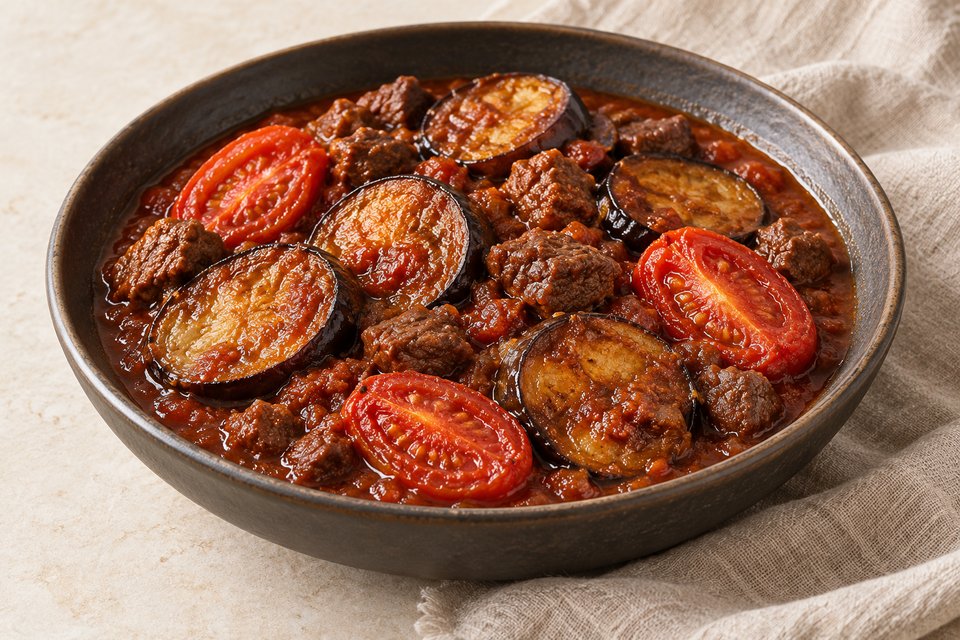
Use the right eggplant size
Khoresh bademjan (خورش بادمجان, also bademjoon) is a Persian eggplant stew. This version uses Shadi Hasanzadenemati's beef-and-tomato base and browned, skin-on Italian eggplant. Homa instead uses peeled baked eggplant and a separately prepared beef broth. Those eggplant methods and final simmer times are different.
Choose small slender eggplants and cut even half-inch rounds. The first pan cook gives color; they should still hold their shape when added to the sauce. Reduce a watery sauce before adding the eggplant so it does not need prolonged stirring.
A documented lemon finish avoids hard-to-find sour grapes
Homa prefers tart unripe grapes (ghooreh) and lists fresh citrus, sour-grape juice and Persian dried lime as distinct alternative sources of acidity. Shadi specifies the juice of one lemon stirred in at the end, separate from an optional pierced dried-lime variation. Culinara intentionally chooses the one-lemon finish for access in US grocery stores without guessing how many black-lime pieces equal a lemon.
Tomato halves are browned separately in Shadi's approach and added late with the eggplant. The method preserves their shape instead of converting them into a homogeneous paste. Water from the long beef simmer must reduce enough to coat the eggplant; do not invent a universally timed final volume.
Meat, cross-contact and storage
Keep raw-beef utensils separate from cooked food. Maintain a gentle simmer and check the largest cubes for fork tenderness. Whole-cut beef has a safety minimum of 145°F with a three-minute rest; braising chuck needs longer cooking for tenderness.
Wash produce under running water. Refrigerate stew and any cooked rice in shallow containers at 40°F or below within two hours, or one hour above 90°F. Reheat leftovers to 165°F.
Research sources
- Shadi Hasanzadenemati — Khoresh Bademjan Persian Eggplant Stew (checked 2026-10-22)
- Homa — Khoresh Bademjan Persian Eggplant Stew with Beef (checked 2026-10-22)
- U.S. FDA — Safe Food Handling (checked 2026-10-22)
- FoodSafety.gov — Safe Minimum Internal Temperatures (checked 2026-10-22)