recipe
Kalam Polo: Persian cabbage rice with tender beef
A layered cabbage-and-beef Persian rice using grocery-store green cabbage, small beef cubes and parboiled basmati, without a required tahdig crust or cloth-covered lid.
Jump to ingredients and methodPrint using your browser’s Print command.
Ingredients and method
Ingredients
- 1 pound beef chuck or another stew cut, trimmed and diced into small roughly 1/2-inch pieces
- 1 small yellow onion, finely diced, for the beef
- 1 medium yellow onion, thinly sliced, for the cabbage
- 1 1/4 pounds green cabbage (about half a large head), cored and cut into bite-size pieces
- 1 tablespoon unsalted butter for the beef
- 3 tablespoons unsalted butter for browning the cabbage
- 2 tablespoons neutral vegetable oil for browning the sliced onion
- 1 teaspoon ground turmeric
- 1/2 teaspoon ground black pepper, with more at serving if desired
- 1/2 teaspoon ground cinnamon
- A tiny pinch of cayenne pepper, optional
- 1 1/2 tablespoons plain tomato paste
- 1 cup water to start the beef; additional hot water only if needed until tender
- 1/2 teaspoon kosher salt to start the beef-and-cabbage filling
- 2 1/2 US cups uncooked white basmati rice, rinsed and drained
- 8 US cups water for parboiling and draining the rice (not absorption water)
- 1 tablespoon kosher salt for the boiling rice water, mostly drained away
- 2 tablespoons neutral vegetable oil for finishing the covered rice pot
- 1/8 teaspoon finely ground culinary saffron in 2 tablespoons hot water, optional
- 1–2 tablespoons extra hot water only if needed to finish steaming firm rice
Method
- Wash and dry the cabbage, remove its core and cut into roughly 1-inch pieces. Prepare the onions before handling the raw beef. Use separate raw-meat utensils and wash hands afterward.
- In a small heavy pot, melt 1 tablespoon butter over medium heat. Add the diced small onion, beef, turmeric and black pepper. Stir until the meat releases some juices. Add 1 cup water and the filling's half teaspoon salt; bring to a boil, cover and lower to a gentle simmer.
- After about 20 minutes stir in the tomato paste. Continue the covered simmer until the beef yields readily to a fork, checking from 30 minutes total but allowing substantially longer for chuck. Add small amounts of hot water if it begins to dry. When tender, uncover briefly if needed to reduce the sauce until it coats the meat rather than forming a watery pool.
- While the beef cooks, heat 2 tablespoons oil in a wide skillet and cook the sliced medium onion until golden, stirring often. Transfer it to a bowl. Melt 3 tablespoons butter in the skillet and brown the cabbage over medium heat, stirring and working in batches if the pan is crowded. Combine the cooked cabbage, browned onion, cinnamon, optional cayenne and tender beef with its reduced sauce.
- Use a heavy 5- to 6-quart pot for the rice. Bring the 8 cups parboiling water and tablespoon salt to a rolling boil. Add the rinsed basmati and stir gently once. Start checking a cooled grain after 5–8 minutes: the outside should be soft with a firm center. Drain, rinse briefly with cool water and drain well. Begin layering promptly.
- Warm the remaining 2 tablespoons oil in the empty rice pot over medium-low heat. Spread a thin layer of rice over the bottom. Loosely alternate the rest of the rice and hot beef-cabbage mixture without packing them down. Drizzle the optional saffron infusion over the top. Cover with a well-fitting lid; keep loose cloth away from the burner.
- Maintain medium-low heat until steam is established, then use the lowest heat that keeps gentle steaming. Start checking the rice after about 45 minutes; the source allows about 75 minutes on medium-low. Continue until the upper grains are tender and filling hot throughout. If rice stays firm and the pot is dry, sprinkle 1–2 tablespoons hot water over the upper rice, replace the lid and continue. Reduce heat if you smell scorching.
- Spoon onto a platter; this version does not require an intact crust. Refrigerate leftovers in shallow containers within 2 hours, or 1 hour above 90°F, at 40°F or colder. Reheat leftovers to 165°F.
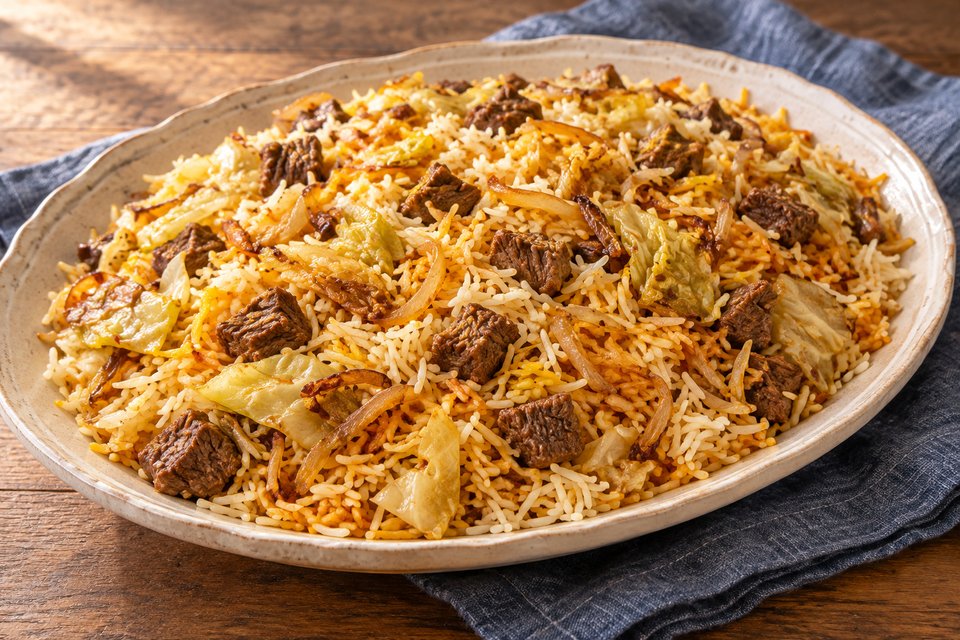
Cabbage rice has more than one regional formulation
Kalam polo (کلم پلو) simply identifies cabbage-and-rice preparations, and the name covers more than one style. Homa of Persian Mama makes a relatively simple beef-cube, golden-cabbage and tomato mixture with a cinnamon note, then alternates it with basmati. IranCook's explicitly Shirazi version instead includes plentiful basil, dill, leek/chive greens (tareh) and a little tarragon, plus small ground-meat balls bound with chickpea flour. Those are different dishes in flavor and shopping requirements, not ingredients to average into an imaginary standard.
This version uses beef cubes and ordinary green cabbage. It keeps the tomato and cinnamon profile while reducing the original's butter, salt and pepper, omitting the separate rice-spice blend and potato base. The herb-and-meatball Shirazi preparation is a different variation.
Why parboiled rice matters here
Finish the beef before layering. A watery filling wets some grains while the others remain firm; a sauce that lightly coats the meat is easier to distribute. Chuck can need much longer than the source's small cross-rib pieces, so wait for tenderness rather than stopping at a fixed meat-cooking time.
Parboiling water is drained away; it is not an absorption ratio. Use a close-fitting lid to retain steam and keep the rice loose. This adaptation omits the source's towel and potato tahdig, so it does not promise the same crust or release. A little rescue water is for still-firm rice only.
US purchase details and food handling
Buy ordinary green head cabbage, not Napa cabbage, sauerkraut or prepared coleslaw dressed in vinegar. Beef chuck sold for stew may include large pieces of connective tissue; cut them smaller and extend the gentle simmer until tender. The butter in the beef and cabbage introduces milk; replacing it with oil is a different, not-kitchen-tested variation.
Butter contains milk. Keep raw beef separate from salad ingredients. Whole beef cuts have a minimum of 145°F with a 3-minute rest; this simmer continues much longer for tenderness. Cool the finished rice promptly and reheat leftovers to 165°F.
Research sources
- Homa — Kalam Polo, Persian Mama (cubed beef and cabbage) (checked 2026-10-22)
- IranCook — کلم پلو با گوشت قلقلی (Shirazi herb-and-meatball version) (checked 2026-10-22)
- U.S. FDA — Safe Food Handling (checked 2026-10-22)
- FoodSafety.gov — Safe Minimum Internal Temperatures (checked 2026-10-22)