recipe
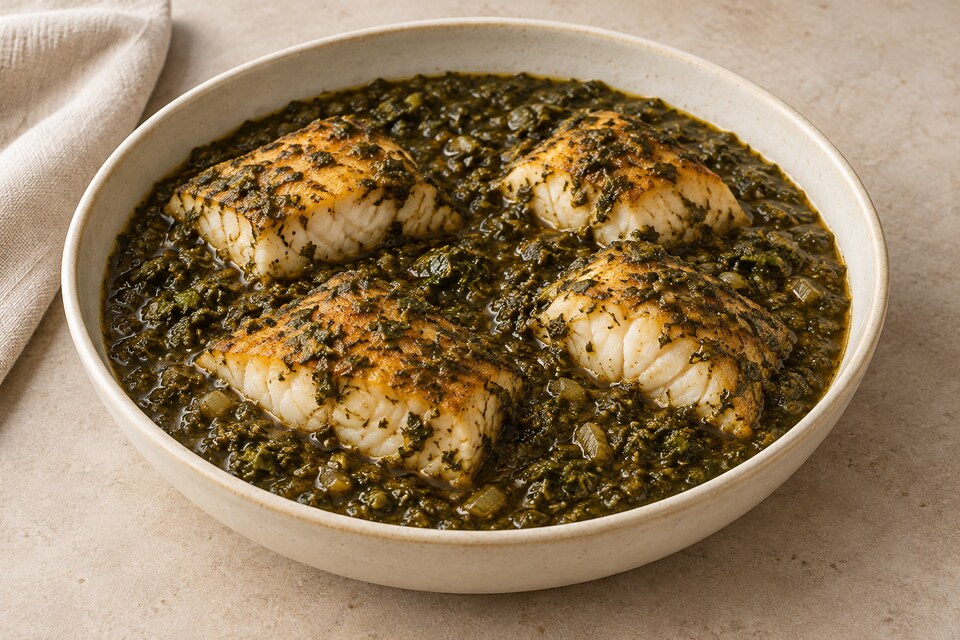
Ghalieh mahi: tamarind fish stew
A southern Iranian fish stew with a sour tamarind sauce, cilantro and fenugreek. Prepare the herb sauce first, then gently finish the fish in it.
Four large fish pieces (2 pounds total); rice separate
Plan ahead: Thaw frozen fish in the refrigerator as its package directs. Soak the tamarind for about 30 minutes while preparing the herbs.
Ingredients and method
Four large fish pieces (2 pounds total); rice separate
Planning estimate: 1½–2 hr · Moderate. Thaw frozen fish before starting
Plan ahead: Thaw frozen fish in the refrigerator as its package directs. Soak the tamarind for about 30 minutes while preparing the herbs.
Timing guide: After the tamarind soak and chopping, allow time to soften the onion, fry the herbs and simmer the sauce for about 30 minutes. Sear and finish the fish last, using its internal temperature rather than a fixed total. Rice cooks separately.
Method
- Put the tamarind block in a heatproof bowl and add the 3 cups hot water. Break it into smaller pieces with forks and leave for about 30 minutes. Press the softened mixture through a fine-mesh strainer into another bowl. Keep the sour liquid; discard the seeds and coarse fibers. Do not put those solids in the stew.
- While the tamarind softens, prepare the herbs, onion and garlic. Keep the fish refrigerated. Set out a wide, deep sauté pan with a lid, large enough to hold the fish in one layer, and a separate frying pan. In the frying pan, warm 2 tablespoons oil over medium heat. Cook the onion until soft and lightly golden, about 10 minutes, stirring often. Add garlic for about 2 minutes, then turmeric for about 1 minute. Take off the heat.
- In the deep pan, heat 6 tablespoons oil over medium-high heat. Add the thoroughly dried, chopped cilantro and scallions carefully. Stir frequently as they lose moisture, then reduce the heat and keep stirring until darker green and fragrant, roughly 15 minutes altogether. They should remain green-brown, not turn black. Lower the heat if they begin sticking or scorching. Stir in the dried fenugreek, 1 teaspoon salt and cayenne for about a minute.
- Add the onion mixture and strained tamarind liquid to the herbs. Bring to a gentle simmer, cover and cook for about 30 minutes, stirring occasionally. Before adding fish, check the sauce: it should be sour and spoonable, with enough liquid to surround the pieces. If watery, briefly simmer uncovered; if too thick, add a little hot water. Taste and adjust salt and chili now, while no raw fish has touched the sauce.
- Once the sauce is ready, pat the fish dry with paper towels and season with the remaining 1/2 teaspoon salt. Heat the final 2 tablespoons oil in the separate frying pan over medium heat. Sear the fish on one side until lightly golden and it releases from the pan, about 3–5 minutes. Work in batches if necessary. Use a wide spatula to lift each piece directly into the gently simmering sauce, browned side up; it is not yet ready to eat.
- Cover and cook gently without stirring the fish apart. Begin checking after about 5 minutes, and continue until the center of every piece reaches 145°F (63°C) on a food thermometer. Thicker pieces may take longer. Check the fish itself, not just the surrounding sauce; color and a timer do not establish its internal temperature. Use clean utensils for serving.
- Spoon the sauce into shallow bowls and lift a piece of fish onto each portion. Serve promptly with plain rice if desired. Refrigerate leftovers in shallow containers within 2 hours, or within 1 hour above 90°F, at 40°F or colder. Reheat leftovers to 165°F (74°C).
Check the tamarind form before shopping
The word paste can describe quite different tamarind products. This method uses a compressed block of fruit pulp that needs soaking and straining. A smooth, concentrated jar or bottle can be much stronger; 5 ounces of it is not the amount called for here.
Choose an unsweetened pulp block for this version. If you already have a concentrate, use a method written for that product rather than replacing the block ounce for ounce. Sweetened tamarind sauces and chutneys bring other ingredients and do not fit this ingredient list.
Cook the herbs, then finish the fish
Ghalieh mahi is a southern Iranian stew built around fish, herbs and tamarind. This version uses fresh cilantro and scallions with dried fenugreek leaves. A generic dried ghormeh-sabzi blend has a different balance and is not a cup-for-cup replacement.
The long simmer belongs to the sauce. Keep the fish cold until that sauce is ready, then sear and finish it gently. Moving the whole pieces with a spatula and avoiding a rolling boil helps keep them intact. Fenugreek seeds are not a replacement for the leaves.
Plan the rice around the final fish stage
Plain kateh rice gives the sour herb sauce a simple accompaniment. Start the rice while the sauce simmers, and aim to have it nearly ready before searing the fish. Check the rice for tenderness instead of trying to synchronize two fixed timers.
This is the fish-only version. Other versions add prawns, tomato or different spices; adding those here would change the shopping list and cooking sequence. For a different herb-centered stew without fish, see baghali ghatogh, made with fava beans, dill and eggs.
Keep raw fish separate from serving tools
This dish contains fish. Keep raw seafood and its juices away from cooked rice and other ready-to-eat foods, and wash hands, cutting boards and utensils after handling it. Refrigerate raw fish at 40°F or colder and use it within 2 days of purchase, or freeze it.
Follow the fish package for thawing and handling. Measuring 145°F in the thickest part is more dependable than assuming all four pieces finish together.