recipe
Ash Reshteh: Persian herb, bean and noodle soup
Persian herb-and-bean soup with canned chickpeas and pinto beans, fresh greens and ash reshteh noodles, finished with onion, mint oil and optional plain yogurt.
Jump to ingredients and methodPrint using your browser’s Print command.
Ingredients and method
Ingredients
- 5 tablespoons olive oil, divided: 3 for soup, 1 for fried-onion garnish, 1 for dried-mint oil
- 2 medium yellow onions, thinly sliced and divided: 1 for the soup base and 1 for the fried-onion garnish
- 3 garlic cloves, minced
- 1 teaspoon ground turmeric
- 2 tablespoons dried mint, divided
- 1 cup dry green or brown lentils, rinsed and picked over
- 1 (15-ounce) can chickpeas, drained and rinsed
- 1 (15-ounce) can pinto beans, drained and rinsed
- 8 US cups water, with more hot water available as the soup thickens
- 12 ounces fresh spinach, thoroughly rinsed and roughly chopped
- 1 3/4 US cups chopped fresh flat-leaf parsley, loosely filled
- 1 US cup chopped fresh cilantro, loosely filled
- 8 ounces dry ash reshteh noodles (check the label; not the toasted noodles sold for rice)
- Kosher salt and ground black pepper to taste
- 1/2 US cup plain unsweetened yogurt for an optional serving drizzle; choose a dairy-free topping if required
Method
- Rinse and pick over the lentils; drain and rinse both cans of beans. Wash the spinach, parsley and cilantro and chop them. Have a large, heavy pot ready because the noodles and greens will increase the soup's volume.
- Heat 3 tablespoons oil in the pot over medium heat. Cook one sliced onion until soft and golden at the edges. Add the garlic and turmeric, stir briefly without browning the garlic, then stir in 1 tablespoon dried mint away from aggressive heat.
- Add the lentils, chickpeas, pinto beans and 8 cups water. Bring to a simmer. Add spinach, parsley and cilantro in handfuls, allowing each addition to wilt. Cover loosely and simmer, stirring from the bottom occasionally, until the lentils are tender; begin checking around 35–40 minutes rather than using the clock alone.
- Break the ash noodles into manageable shorter lengths and stir them thoroughly into the simmering soup. Cook uncovered, stirring regularly, until the noodle pieces are tender and the soup is thick but still spoonable. Start checking at the package's cooking time; the referenced versions commonly allow about 10–15 minutes. Add hot water gradually if the pasta absorbs too much liquid. Salt cautiously because noodle brands vary.
- Meanwhile, heat 1 tablespoon of the measured oil in a separate skillet and cook the second onion slowly until golden at the edges. In a small skillet over low heat warm the final tablespoon of measured oil, briefly stir in the remaining tablespoon of dried mint, and remove the pan from the heat before the mint darkens.
- Ladle into bowls and add some of the cooked onion, mint oil and a little plain yogurt if desired. This is a yogurt-topped adaptation, not a claim that yogurt and kashk are the same ingredient. Refrigerate any remaining soup promptly in shallow containers.
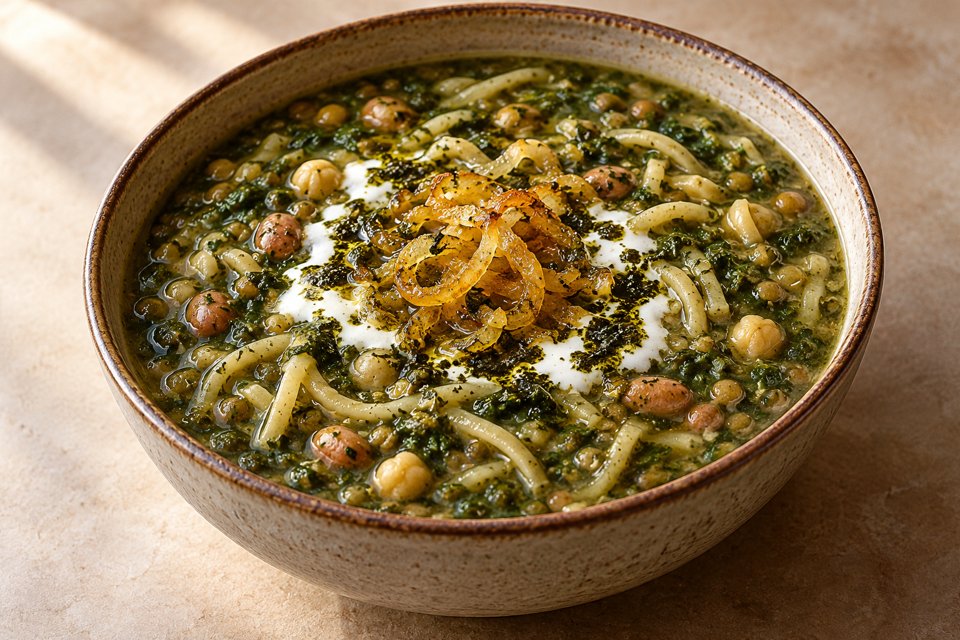
Reshteh is not the same product as rice noodles
Use the flour-based, relatively flat noodles labeled ash reshteh or aash reshteh. Some Iranian shops also sell roasted reshteh for rice: that is a different product. The site's noodle shopping guide explains the distinction. If noodles are unavailable, Persian Mama explicitly allows plain linguine in its version; that makes a reasonable emergency pasta soup, but it changes the flavor and is not equivalent by cooking time.
The amount here follows a more noodle-forward approach described by Shadi Hasanzadenemati, rather than averaging her eight ounces with Homa's four. Judge thickness with the noodle you actually bought and add a little hot water as needed.
Why this version uses canned beans and yogurt
Shadi uses canned chickpeas and pinto beans alongside dry lentils. Homa's version also accommodates cooked or canned beans but adds small quantities of rice and bulgur, stock and a different herbal balance. This recipe keeps one coherent bean-and-noodle method; it does not copy both sets of thickeners.
Kashk is a characteristic tangy garnish, but liquid and dry commercial products require different handling. This version uses a clearly labeled optional plain-yogurt drizzle, following Homa's documented home variation; it is not represented as authentic kashk or a universally interchangeable replacement. Check the packaged noodles and yogurt for wheat/gluten and dairy allergens.
Keep the thick soup safe
Stir along the bottom after adding noodles: starch and legumes can settle and scorch in a narrow pot. The last stage depends on actual noodle tenderness, not solely an elapsed minute count. Never serve dry, undercooked lentils.
Cool leftover perishable soup in shallow containers, refrigerate at 40°F (4°C) or below and do not leave it at room temperature longer than the FDA's two-hour rule (one hour above 90°F).
Sources: [3]
Research sources
- Homa — Aash Reshteh, Persian Mama (checked 2026-10-22)
- Shadi Hasanzadenemati — Ash Reshteh, Unicorns in the Kitchen (checked 2026-10-22)
- U.S. Food and Drug Administration — Safe Food Handling (checked 2026-10-22)