recipe
Abgoosht (Dizi): Persian beef, chickpea and potato broth
A slow, simple Persian short-rib meal with canned chickpeas, potatoes and dried lime, showing how to serve broth-soaked flatbread separately from the cooked meat and vegetables.
Jump to ingredients and methodPrint using your browser’s Print command.
Ingredients and method
Ingredients
- 2 1/2 pounds meaty bone-in beef short ribs, trimmed of excess outside fat
- 1 medium yellow onion, diced
- 5 large garlic cloves, peeled
- 1 teaspoon ground turmeric
- 1/2 teaspoon ground black pepper
- 2 1/2 US cups water to start, plus extra hot water as needed to retain broth for serving
- 2 1/2 US cups fully cooked plain chickpeas, drained and rinsed (roughly two 15-ounce cans; measure the drained amount)
- 12 ounces russet or Yukon Gold potatoes, peeled and cut into 1 1/2-inch chunks
- 2 medium Roma tomatoes, rinsed and halved
- 1 tablespoon plus 1 teaspoon plain tomato paste
- 3 whole dried Persian limes (limoo amani)
- 5 ounces fresh small okra, trimmed, optional
- 1/2 US cup diced green bell pepper, optional
- 1 teaspoon kosher salt to start, with more only at the end after tasting
- Plain fresh flatbread such as lavash or pita, torn into small pieces at serving
Method
- Trim excess outside fat from the short ribs. Prepare the washed vegetables on a separate board from raw meat, then wash hands and clean raw-meat utensils. Keep the rib bones intact; do not cut or smash them at home.
- Put the ribs, onion, garlic, turmeric, pepper and 2 1/2 cups water in a heavy Dutch oven just large enough to hold them comfortably. Bring to a boil, then cover and reduce to a gentle simmer. Cook until the meat releases readily from the bones and yields easily to a fork, starting to check after 90 minutes and allowing 2 hours or longer if needed. Check occasionally and add hot water if evaporation threatens to dry the pot.
- Carefully lift and remove any loose bones once the ribs are cooked enough to handle; check for small bone fragments before serving. Keep the tender meat and cooking liquid together in the same pot. Do not discard the broth: it is the part used for tileet.
- Near the end of the beef cooking time, soak the whole dried limes in hot water for 5 minutes. Drain and let them cool enough to handle. Rest each lime on a stable board and carefully pierce with a fork, keeping your other hand clear of the tines. Stir the tomato paste into the beef broth, then add the cooked chickpeas, potatoes, tomatoes, salt, prepared limes and any optional okra and green pepper.
- Bring back to a boil, cover and reduce to a gentle simmer for about an hour, checking from 40 minutes. The potato centers must be soft and the vegetables and chickpeas hot throughout. Keep some broth around the solids, adding hot water when needed. If you add water near the end, simmer another 10 minutes to combine the flavors. Remove the whole limes before serving; remove them earlier if the broth has enough lime flavor.
- Use a slotted spoon to transfer the meat, chickpeas and vegetables to a warm serving bowl. Taste the remaining hot broth carefully, adding a little salt if needed. Place small pieces of flatbread in individual bowls and ladle just enough broth over each to soak the bread: this is tileet.
- Serve the hot solids beside the bread-and-broth bowls. To make a mashed version, inspect the solids again for bones and lime pieces, then mash the tender beef, chickpeas and potatoes with a potato masher. Divide leftovers into shallow containers and refrigerate within 2 hours, or 1 hour above 90°F; do not leave the Dutch oven out to cool overnight.
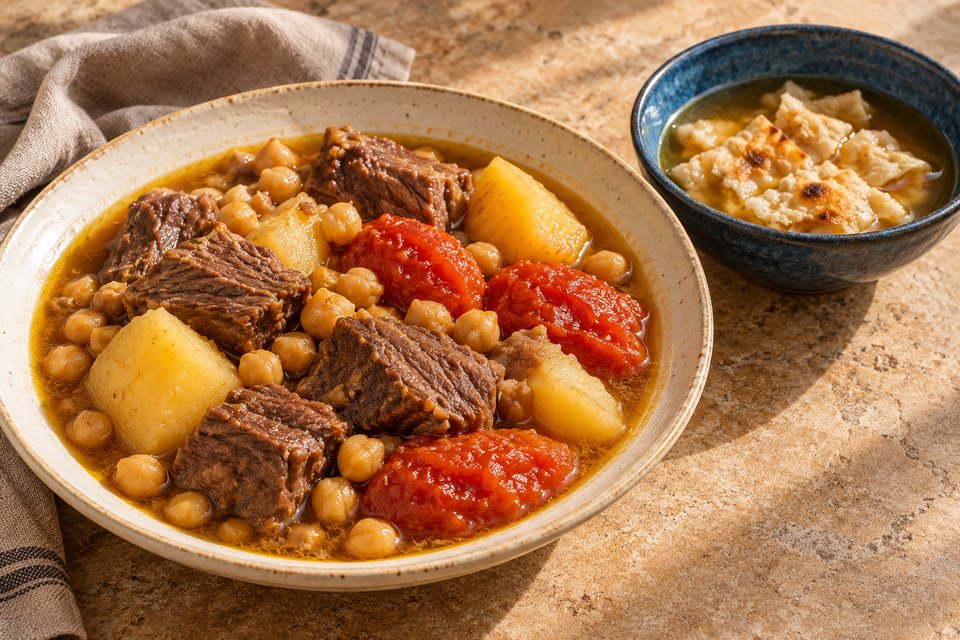
What is dizi, and why is tileet served separately?
Abgoosht (آبگوشت; also abgusht) is a Persian meat broth with potatoes and beans. Dizi refers to the vessel traditionally used for it. Homa and Omid Roustaei describe serving the broth over torn bread as tileet, with the tender solids alongside, either whole or mashed.
You do not need a clay dizi pot or specialty pounder. A heavy covered Dutch oven keeps evaporation under control; a normal potato masher can mash tender deboned solids if desired.
Canned chickpeas are already cooked; do not add raw beans late
Homa's chosen beef-short-rib recipe uses two-and-a-half to three pounds bone-in ribs, about two-and-a-half cups water, and two-and-a-half cups already cooked chickpeas added with potatoes, optional okra, tomato and souring ingredients. Omid uses a different large-water formulation with overnight-soaked chickpeas, white beans and wheat berries from the beginning. He explicitly notes canned beans can be substituted if liquid and time are adjusted.
Measure the chickpeas after draining. Canned chickpeas are already cooked and need only the final simmer here. Dried chickpeas, dried white beans and wheat berries require a different start, water allowance and cooking time; they cannot replace the canned chickpeas at the late addition.
Dried lime and short-rib handling
Homa prefers tart unripe grapes but documents three or four whole dried Persian limes as a separate possible souring ingredient. Omid also cooks whole dried limes, whereas his source uses more water and longer dry-bean simmer. This version chooses three whole limes without claiming their acidity matches precisely one cup frozen sour grapes; taste and remove them if bitterness is noticeable.
The meat must be fork-tender and separate easily from its bones; inspect it carefully before serving or mashing. Whole-cut beef has a minimum safety temperature of 145°F followed by a 3-minute rest, but this braise needs substantially longer cooking for tenderness. Refrigerate leftovers promptly at 40°F or colder and reheat to 165°F. The flatbread normally contains wheat; check its label for other allergens.
Research sources
- Homa — Abgoosht, Persian Mama (short ribs and pre-cooked chickpeas) (checked 2026-10-22)
- Omid Roustaei — Abgoosht, The Caspian Chef (dry legumes and wheat berries) (checked 2026-10-22)
- FDA — Safe Food Handling (checked 2026-10-22)
- FoodSafety.gov — Safe Minimum Internal Temperatures (checked 2026-10-22)